
CAS team develops AttentiveHerb, a neural-network-based algorithm for TCM prescriptions
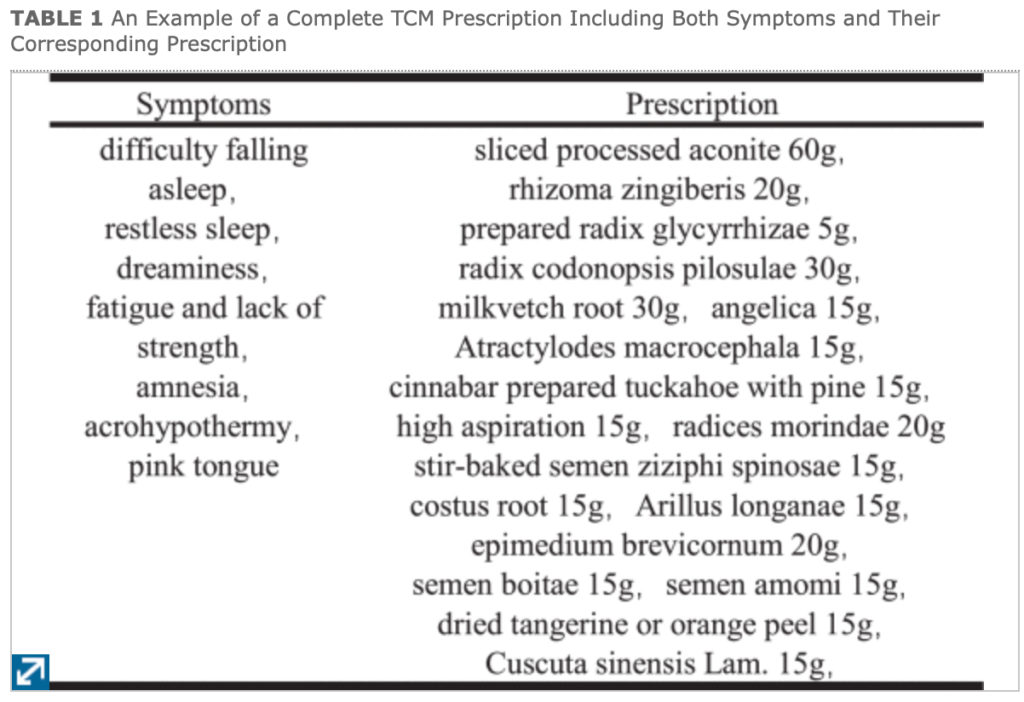
A team around LIU Zhi (CAS Shenyang) and QI Liang (Qingdao University of Science and Technology) has developed a neural-network based system to simulating a doctor’s inquiry and his prescription that is composed by a series of herbs. It can automatically simulate some principles and learns the interaction between symptoms and herbs from clinical records of traditional herbal medicine. This model consists of two different attention mechanisms for distinguishing the main symptoms and pays attention to different symptoms. In 22.41% of all cases tested, several herbs in each predicted prescription overlapped with its label; and 10.1% of cases wesre completely different from the label. In summary, 67.49% of the predicted prescriptions are close to the labels, and 89.9% among them contain the same herbs with the labels.
https://ieeexplore.ieee.org/abstract/document/8839090
CAS Hefei Institute of Physical Science develops „Red Painter“, turning leaf colors into red
The product consists of several bio-active chemicals, such as polyphenols and soluble sugars isolated from the Pistacia chinensis leaves, together with some amino acid and microelements, which significantly induces the anthocyanin and proanthocyanidin biosynthesis in...
CAS Changchun Institute of Applied Chemistry develops prototype of lithium nitride battery
Instead of generating energy from the breakdown of lithium nitride (2Li3N) into lithium and nitrogen gas, the battery prototype runs on atmospheric nitrogen in ambient conditions and reacts with lithium to form lithium nitride. According to Xinbo ZHANG, one of the...
China will increase annual per capita R&D spending to 500,000 Yuan by 2020
According to MOST, China will increase its annual per capita spending on research and development (R&D) to 500,000 yuan by 2020 from 370,000 yuan in 2014, According to the 13th five-year plan for national science and technology talent development (2016-2020), China...
CAS to invest 10 mill RMB for Cambricon deep learning chip
The Cambricon research project is led by two brothers, CHEN Yunji (陈云霁) and CHEN Tianshi (陈天石), two young full professors at the CAS Institute of Computing Technology. Unlike existing neural networks which require thousands of GPU-based accelerators, Cambricon...
China plans experiments related to human reproduction in space
The experiments on China’s space station Tianzhou-1 will study the basic development and maturation of germ cells in a micro-gravity environment, and the developmental potential of human embryonic stem cells, thus taking a first step in investigations concerning human...
China launches first cargo spacecraft Tianzhou-1
The cargo ship is 10.6 meters long and has a maximum diameter of 3.35 meters. Its maximum takeoff weight is 13.5 tonnes, enabling it to carry over 6 tonnes of supplies. Tianzhou-1 will dock with Tiangong-2 space station three times. After the first docking, aerospace...
CAS Shanghai SIBS develops ß-carotene cell factory based on genome editing
The group of YANG Sheng at CAS SIBS has developed a series of genome editing tools for Yarrowia lipolytica and generated an efficient biosynthetic pathway using strong promoters and multiple gene copies for each of the 12 steps involved in ß-carotene biosynthesis....
CAS Hefei Institute of Materia Medica builds cell bank with nearly 70 kinds of kinase targets, relevant for cancer
The occurrence of many tumors is caused by abnormal activation of growth-related kinases. Inhibitors of these mutant kinases are effective in inhibiting the growth of cancer cells. The institute’s cell bank contains nearly 70 kinds of cancer kinase target, with cell...
CAS Shenzhen Institute of Advanced Technology develops low cost potassium battery
In the low cost tin-graphite dual ion battery, expanded graphite is used as anode, and potassium hexafluorophosphate as electrolyte. The potassium ions in the electrolyte move to the surface tin foil cathode to form a potassium-tin alloy, and the hexafluorophosphate...
Zhejiang University scientists create soft robotic fish to record underwater temperature and salinity
The group of Tiefeng LI, an associate professor at Zhejiang University, has Manufactured a 9.3-centimeter-long fish which weighs 90 grams and has an electric controller at the core, fins made of silicone, and a silicone body and tail. All components are transparent...
Beijing sets up innovation center for graphene industrialization
The Beijing Graphene Industry Innovation Center will take the advantage of Beijing's innovative resources to research and develop cutting-edge new materials. China has substantial graphite deposits, and more than 500 companies already specialize in graphene products....
China to build first antarctic airfield by 2018
The airfield, near China's Zhongshan Station, will be able to handle fixed-wing aircraft. The construction of the planned airfield will be carried out by China’s 34th Antarctic expedition, which is set to arrive in Antarctica around the end of this year. The...