
People’s Daily selects China’s 8 major S&T achievements in 2019
According to the journal, these are:
- developing clonal seeds from hybrid rice
WANG Kejian, from the China National Rice Research Institute and the Chinese Academy of Agricultural Sciences, conducted simultaneous genome engineering of meiosis and fertilization genes to develop the clonal seeds
- A slurry tunnel-boring machine challenged a cross-sea project
A 12.26m diameter slurry tunnel boring machine (TBM) designed by CREG excavated a 2.9km long double-track metro rail tunnel under the Suoyu Bay in the city of Dalian in northeast China
- Beijing Daxing International Airport broke several world records
The roof of the terminal building consists of a central skylight, six strip skylights and eight bubble-shaped windows. It needed to be spliced with 12,800 pieces of glass in different shapes and materials, connected by 12,300 spherical nodes and more than 60,000 rods. The roof looks like it is made up of clouds, but weighs more than 30,000 tons

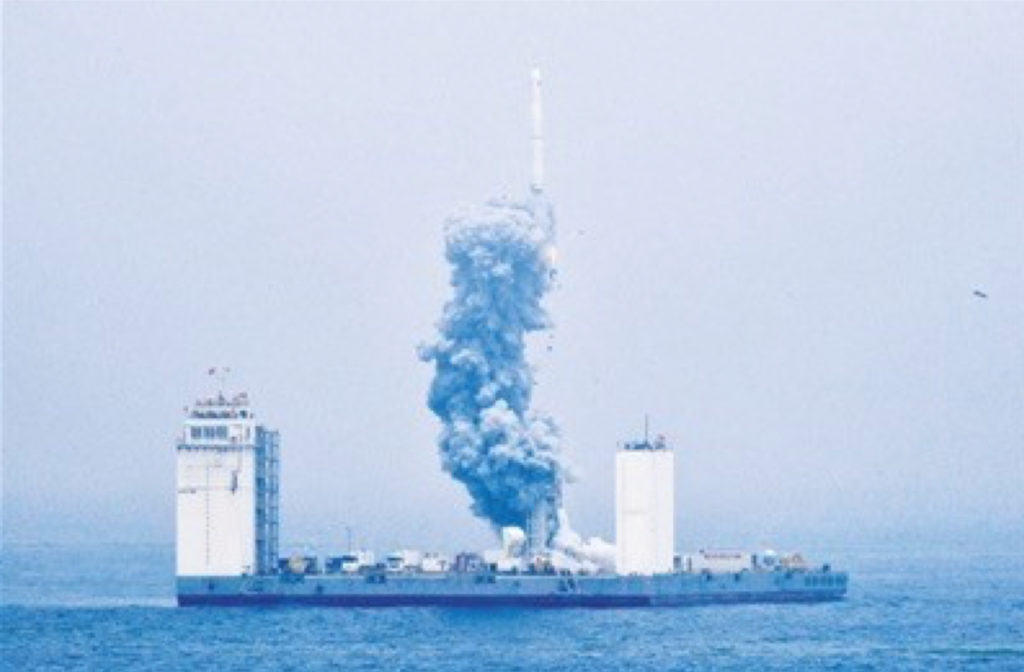
- a first rocket into space was launched from a sea platform
A Long March 11 solid-propellant carrier rocket blasted off at 12:06 pm on June 5 from a mobile launch platform — a modified submersible craft — in the Yellow Sea off the eastern province of Shandong and then sent seven satellites into orbit about 600 kilometers above the Earth,
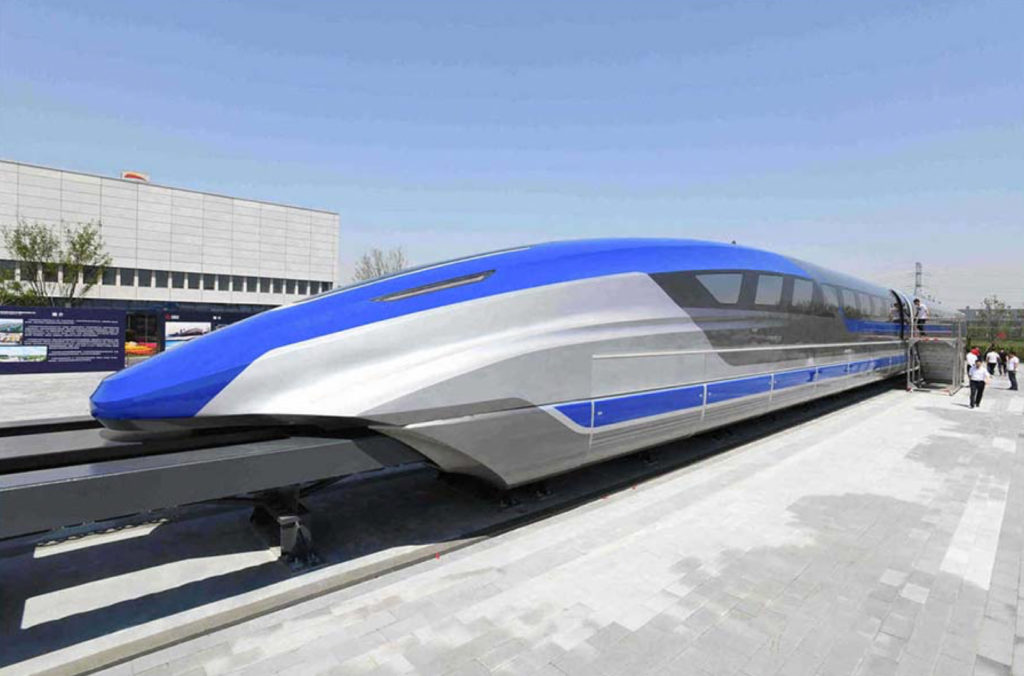
- a high-speed maglev train prototype was tested
a prototype magnetic-levitation train with a designed maximum speed of 600 kilometers per hour was launched in Qingdao,
- work progressed on the International Thermonuclear Experimental Reactor (ITER) Tokamak
a China Nuclear Power Engineering (CNPE)-led consortium won the bid for an installation project in a Tokamak Assembly Contract 1 (TAC1)
- China’s first private commercial rocket took off into orbit
iSpace, a Beijing-based private rocket company and China’s answer to SpaceX, successfully launched its prototype “SQX-1 Y1” solid rocket from Jiuquan Satellite Launch Center, and
- Tianhe-2 supercomputer works out the criterion for quantum supremacy
A world’s first criterion for quantum supremacy was issued on Nov.4 in research jointly led by Prof. Wu Junjie at the National University of Defense Technology.
During the research process, a boson sampling task was performed on the Tianhe-2 supercomputer.
© People’s Daily Engish edition, December 24, 2019
China to build first antarctic airfield by 2018
The airfield, near China's Zhongshan Station, will be able to handle fixed-wing aircraft. The construction of the planned airfield will be carried out by China’s 34th Antarctic expedition, which is set to arrive in Antarctica around the end of this year. The...
CAS Beijing Institute of Nanoenergy and Nanosystems improves TENG-type self-powered portable electronic device
The cut-paper-based self-charging power unit (PC-SCPU) is capable of simultaneously harvesting and storing energy from body movement by combining a paper-based triboelectric nanogenerator (TENG) on a teflon substrate (FEP) and a supercapacitor (SC). With paper as...
Space Tracking Ship Yuanwang-7 begins space monitoring mission
Yuanwang-7 is 220 meters long, 40 meters high and has a displacement of nearly 30,000 tons. It entered service on July 12, 2016, and has performed scientific research and experiment-related tasks, including tracking missions for the maiden flight of the Long March-5,...
CAS Institute of Biophysics visualzes aging-associated alterations in 3D image of whole genome
Using a thioredoxin-fused TALE system, the groups around Tao XU and colleagues achieved high-quality imaging at various genomic loci and observed aging-associated (epi) genomic alterations at telomeres and centromeres in human and mouse premature aging models. They...
CAS team finds that fatty acid (FA) synthesis is critical for stem cell pluripotency via promoting mitochondrial fission
The group of Ping GAO and Huafeng ZHANG at China University of Science and Technology have found that de novo FA synthesis controls cellular reprogramming and embryonic stem cell pluripotency through mitochondrial fission. Mechanistically, de novo FA synthesis...
China looks for greater role in Arctia
Since 1999, the China National Arctic Research Expedition has carried out seven cruise missions in the Arctic Ocean using the icebreaker Xuelong, and has established two research stations, the Yellow River Station at Ny Alysund in Norway and the Joint China-Iceland...
Ocean University of China scientists complete scallop genome
The sequencing effort towards a high-quality, chromosome-anchored reference genome (988 Mb) for the scallop Patinopecten yessoensiswas done jointly with a team of Rutgers University, USA, and the Sars International Center for Marine Molecular Biology, Norway. CAS news...
China’s first “online hospital” obtains license in Shenzhen
The Medical 160 Spruce Online Hospital (就医 160-云杉医疗网上医院) will offer: online references and registrations to other clinics, to consultations, to doctor appointments registration, video-based diagnosis and treatment, follow-ups for patients, management of slow disease,...
China will upgrade robot industry
More than 800 enterprises that provide products and services spanning electronics, machinery, chemicals and medical services have already laid sound foundations for the upgrade, according to the Ministry of Industry and Information Technology. China produced 72,400...
Ministry of Environmental Protection issues „high fuel pollution directory“
The catalogue provides standards for the production and use of coal and its products (including raw coal, coal, coal gangue, slime, coal slurry, briquette, coke, blue carbon, etc.), oil and other conventional fuels, but not for industrial waste and garbage,...
Researchers at Guangdong University of Technology reverse type 1 diabetes in mice by gene therapy
The groups of Zijian ZHAO and Fanghong LI had observed that families with a history of diabetes type 1 were able to reduce the risk of their offpsring to attract this disease by providing them on long-term with fish-oil after weaning. As a consequence, they applied...
Chinese Academy of Agricultural Sciences builds sesame germplasm and gene pool base
Xiurong ZHANG and his team over the past 30 collected 7910 sesame germplasms, covering 30 Chinese provinces and locations on five continents, to build the first sesame gene information base, with 819.3 Gb of public data, and 7200 genome tags. They built the first...