
Evolutionary aspects of the novel coronavirus in China
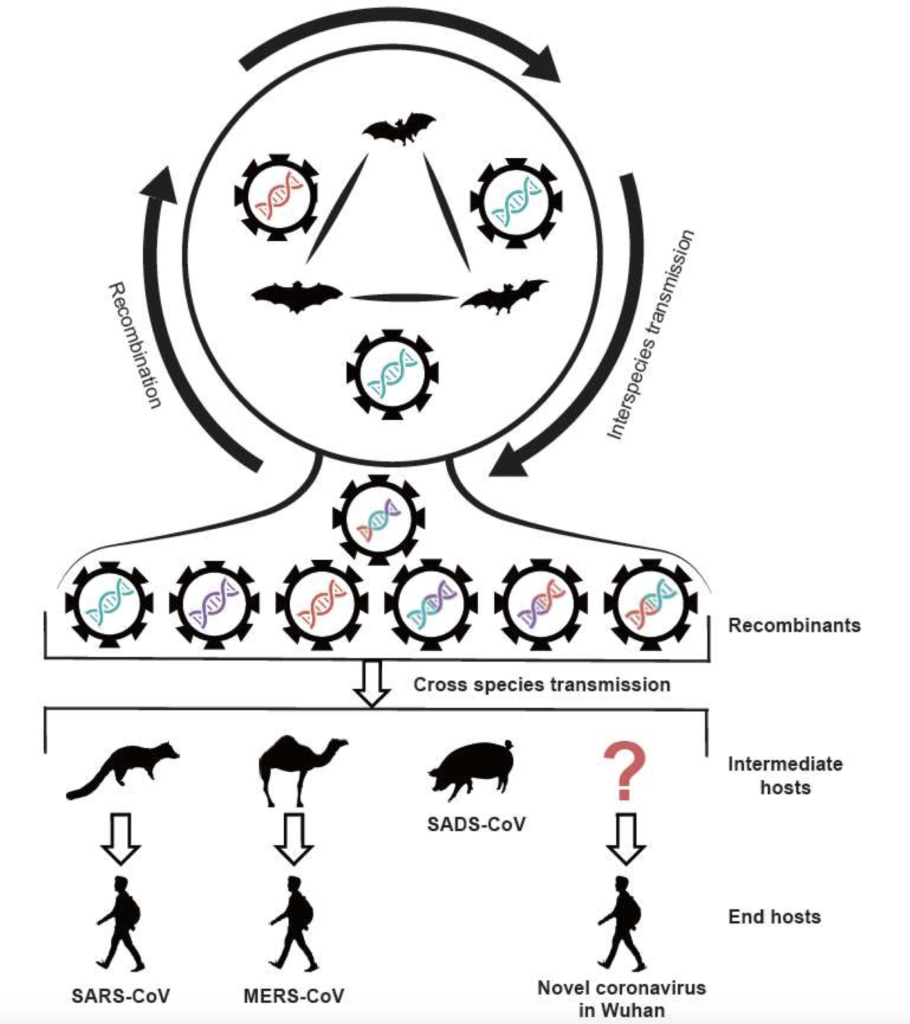
In an open paper published by Oxford Press’ National Science Review, WEI Xiaoman, LI Xiang and CUI Jie from the CAS Institut Pasteur and CAS Wuhan Institute of Virology draw the following conclusions, based on next-generation sequencing:
“The novel coronaviruses 2019-nCoV in Wuhan likely had a bat origin, but how the human-infecting viruses evolved from bats requires further study. The human-infecting virus may become more infectious but less virulent as it continues to (co-)evolve and adapt to human hosts. Since Wuhan is one of the largest inland transportation hubs in China and the city has been closed off, it is urgently necessary to step up molecular surveillance and restrict the movement of people in and out of the affected areas promptly, in addition to closing the seafood markets.”
https://doi.org/10.1093/nsr/nwaa009
CAS Hefei Institute of Physical Science develops nanocomposite to promote potato seed sprouts
How quickly potatos sprout closely depends on covering ratio of water and air of the plant's surface. WU Zhengyan’s team has developed a method to enhance sprouting by NPA, an amphiphilic nanocomposite made from silica in an anattapulgite network. Apart from faster...
CAS DICP team converts methane to C1 oxygenate at room temperature
The group of Xinhe BAO at Dalian Institute of Chemical Physics has designed a series of graphene-complexed 3d transition metals such as manganese, iron, cobalt, nickel and copper as catalytic material. They found that a graphene-complexed single iron center can...
Chinese Ministry of Commerce sponsors training of African technicians in desertification countermeasures
Eleven students from Egypt, Botswana, Namibia and other African countries are presently involved in a desertification prevention and ecological restoration training group at CAS Gansu Provincial Sand Research Institute. They study China's technologies on...
US-Chinese team discovers two novel fatty acids in Chinese violet cress seeds
A team from the University of Nebraska-Linconl and from Huazhong Agricultural University has found that violet cress oil contains up to 50 % of two C-24 fatty acids as components of their seed oil. The two fatty acids were named nebraskanic acid and wuhanic acid. The...
CAS Chengdu Institute of Biology designs single-cell protein process based on an ammonia biogas slurry
The team of LI Dong isolated two cocci, Paracoccus denitrificans Y5 and Habitatella paracoccus versutus D6 which could grow heterotrophically on glucose and ammonia and autotrophically on biogas slurry (CO2 as inorganic carbon source and ammonia nitrogen) under...
CAS DICP designs nanoreactor for hydrogenation of phenylacetylene
The team of LIU Jian at Dalian Institute of Chemical Physics has designed a submicron reactor of eggshell structure, loaded with metal nanoparticles into a zinc oxide-microporous carbon core shell (Pd&ZnO@carbon) which showed high selectivity (> 99%) in the...
China Airline Industry Group Co. puts AG600 amphibian airplane into service
The largest China-built amphibian airplane, built mainly for large fire extinguishment and marine rescue, after successful completion of the first flight on December 24, 2017, was now stationed in Hubei Provincial Jingmen Zhanghe Airport. Japan JST China news, August...
China targets 73,000 km2 for afforestation per year
According to the National Forestry and Grassland Bureau, China will complete afforestation of 73,000 km2 each year, and set the forest ratio nationwide to 26% by 2035. By 2020, 200 national „forest cities“ will be built, including six forest city clusters and 20,000...
CAS TIB engineers C. glutamicum for methanol-dependent growth and glutamate production
The group of SUN Jibin at Tianjins Institute of Industrial Biotechnology rationally designed and experimentally engineered Corynebacterium glutamicum to serve as a methanol-dependent synthetic methylotroph. The cell growth of the methanol-dependent strain relies on...
Chinese team develops simple chip for visible light communication
A team at Tianjin and Chongqing supported by CAE Academician QI Jiangxing presented a chip set consisting of a visible light optoelectronic front-end chip and a digital baseband chip. It can support high-speed transmission of Gbits per second, and is fully compatible...
China to build State-level industrial innovation centers
The National Development and Reform Commission decided to build several industrial innovation centers around Beijing, Shanghai and the Guangdong-Hong Kong-Macao Greater Bay Area to support development of these areas into world-class science and technology innovation...
China inaugurates spallation neutron source
The neutron scattering source is located in Dalang Town of Dongguan City, Guangdong province. Construction was done by scientists and engineers of CAS Institute of High Energy Physics and lasted six and a half years, at cumulated costs of 2.3 billion RMB. The...